
A named condition needs a precise answer

Can pet insurance cover FIV?

A policy issued to a cat, a paid FIV screening test and coverage for the infection are three different things.

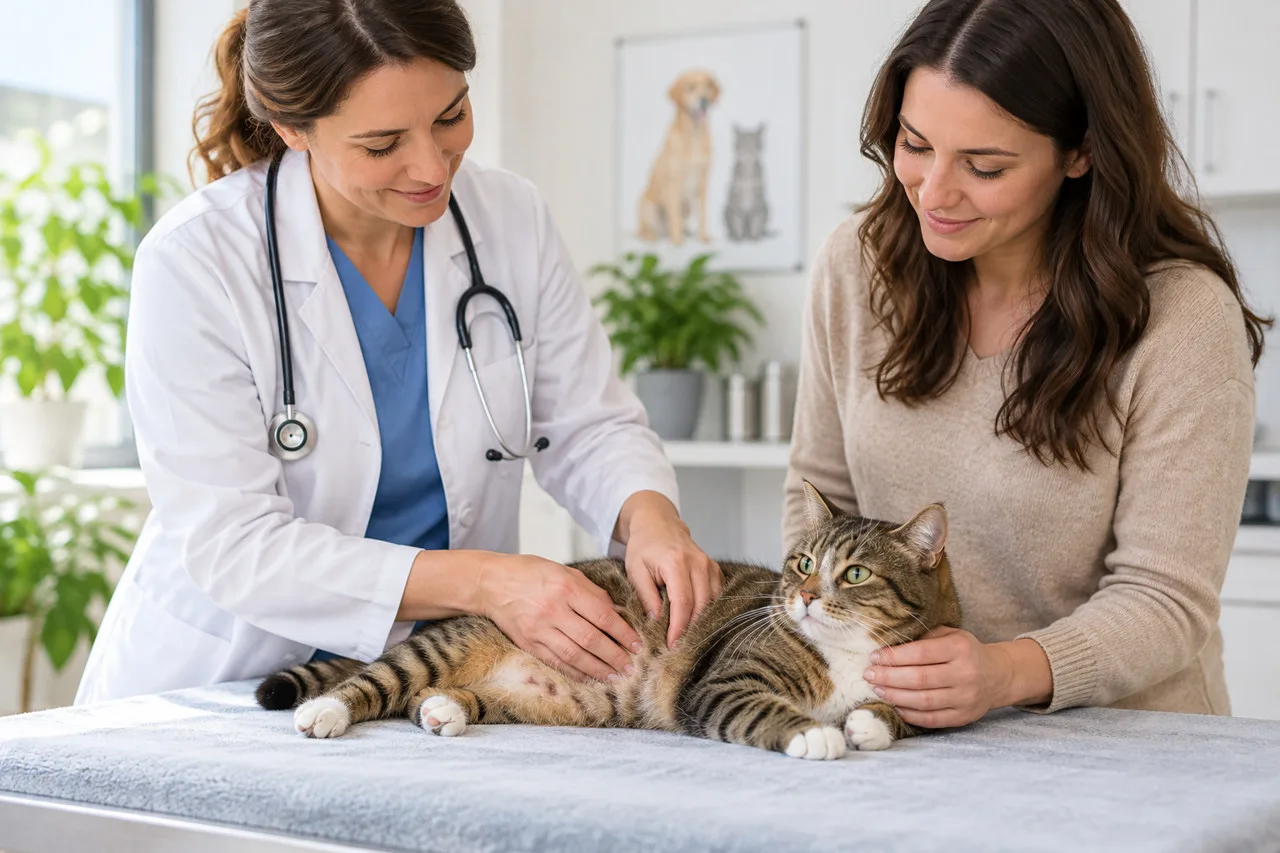
Veterinarian discussing a cat’s examination with its owner
✓ Policy-first ✓ Independent ✓ Useful checks
Direct answer
An accident-and-illness policy may cover an eligible newly arising FIV-related illness, but an FIV infection or related signs that predate the policy’s applicable coverage start can fall under a pre-existing-condition exclusion. Some insurers advertise special pre-existing-condition benefits, yet that does not verify FIV coverage for your cat. There is no confirmed universal FIV-covering plan in this review; obtain the exact state contract and a condition-specific explanation.
What to know

What does “covers FIV” actually mean?

Statement you may see What it establishes What is still missing
“Includes an FeLV/FIV test” A named screening benefit may exist in the selected routine-care schedule. Whether diagnostic testing or treatment of an infection is eligible.
“Covers illnesses” The product has an illness section. Whether FIV onset/history and all relevant exclusions satisfy that section.
“Accepts FIV-positive cats” Enrollment may be possible. Whether FIV and associated care are excluded despite enrollment.
“Covers pre-existing conditions” There may be a special contractual route. The applicable state form, condition eligibility and any continuous-coverage requirement.

That is useful information about a test benefit, not proof that the policy pays for the infection itself. Ask what the test is being used for and which benefit the insurer says applies.
What to know

If FIV is first identified after enrollment

Keep the existing contract and the full veterinary record. A positive result obtained after enrollment does not by itself prove the infection began after the illness waiting period. Conversely, the test result should not be treated as automatic evidence that every earlier symptom had the same cause.

Ask the insurer to identify the definition and medical evidence it would apply. Relevant questions include whether earlier clinical signs were consistent with the condition, whether the illness waiting period had ended, and whether the requested treatment otherwise satisfies the policy. The veterinarian describes the medical findings; the insurer applies the contract.

Do not cancel useful existing cover solely because FIV has now been identified. First understand the current policy’s position and what replacing it could change. A new provider will assess a different pre-enrollment history.

What to know

When the test result is not yet settled

Tabby cat resting on a soft blanket
A photograph cannot show FIV status. Testing and interpretation belong with the veterinarian.

Cornell explains that some positive antibody results need confirmation and that an early negative result can miss recent infection. FIV has no definitive cure; an apparently healthy interval should not be described as proof the infection disappeared.

For insurance paperwork, preserve the test report and the veterinarian’s interpretation, including uncertainty. If a later test changes the diagnosis, ask the clinic for an accurate update and send it through the insurer’s official process. Keep the original report too. A corrected clinical conclusion is useful evidence; it is not permission to erase history or backdate the policy.

This guide cannot interpret your cat’s result. Follow the veterinarian’s testing and care recommendations rather than delaying care while looking for a different insurance answer.

Coverage

A special pre-existing benefit is a lead, not a finding

AKC Pet Insurance advertises eligibility for pre-existing conditions after 365 days of continuous coverage. Its public description does not establish that FIV is covered for a particular applicant. The state-document page directs shoppers to state-specific forms; the dynamically selected form was not obtained in this review.

Before paying premiums in anticipation of that benefit, request the applicable form and ask explicitly whether FIV is eligible, whether illness coverage can be issued to this cat, which associated conditions are addressed, and what continuous coverage and other restrictions apply. Keep any answer with its limitations. A general advertising page cannot answer all of those questions.

If no provider confirms a usable FIV benefit, separate two budgets: care you expect to fund for the existing infection and any future unrelated risks you choose to insure. Do not assign speculative future reimbursement to today’s care costs.

What to know

The written question should name the condition and the service

A useful request is: “For the attached medical history and the policy form you propose, how are confirmed FIV infection, monitoring of that infection and treatment of a later condition considered related to it handled? Please identify the relevant benefit, exclusion and waiting provision, and tell me whether your answer is an eligibility explanation or a claim determination.”

Ask about a specific service recommended by the veterinarian when one exists. Do not ask the insurer to promise every possible future treatment. If a claim is later declined, compare the stated reason with the actual contract and clinical evidence; an appeal should address the cited provision rather than repeat that the advertisement said “illness coverage.”

Evidence

Sources and policy context

These public references support the consumer or veterinary context. Named insurer details were checked in official product materials; the policy offered for your pet and state determines the actual terms.

Next step

Compare Current Pet Insurance Rates

Check current options for your pet and location, then compare the policy details, exclusions, costs, and eligibility before choosing.

Compare the policy before you choose Check the actual offer, exclusions and out-of-pocket terms.
See Rate Options